"I paint the way I write, the way I laugh."
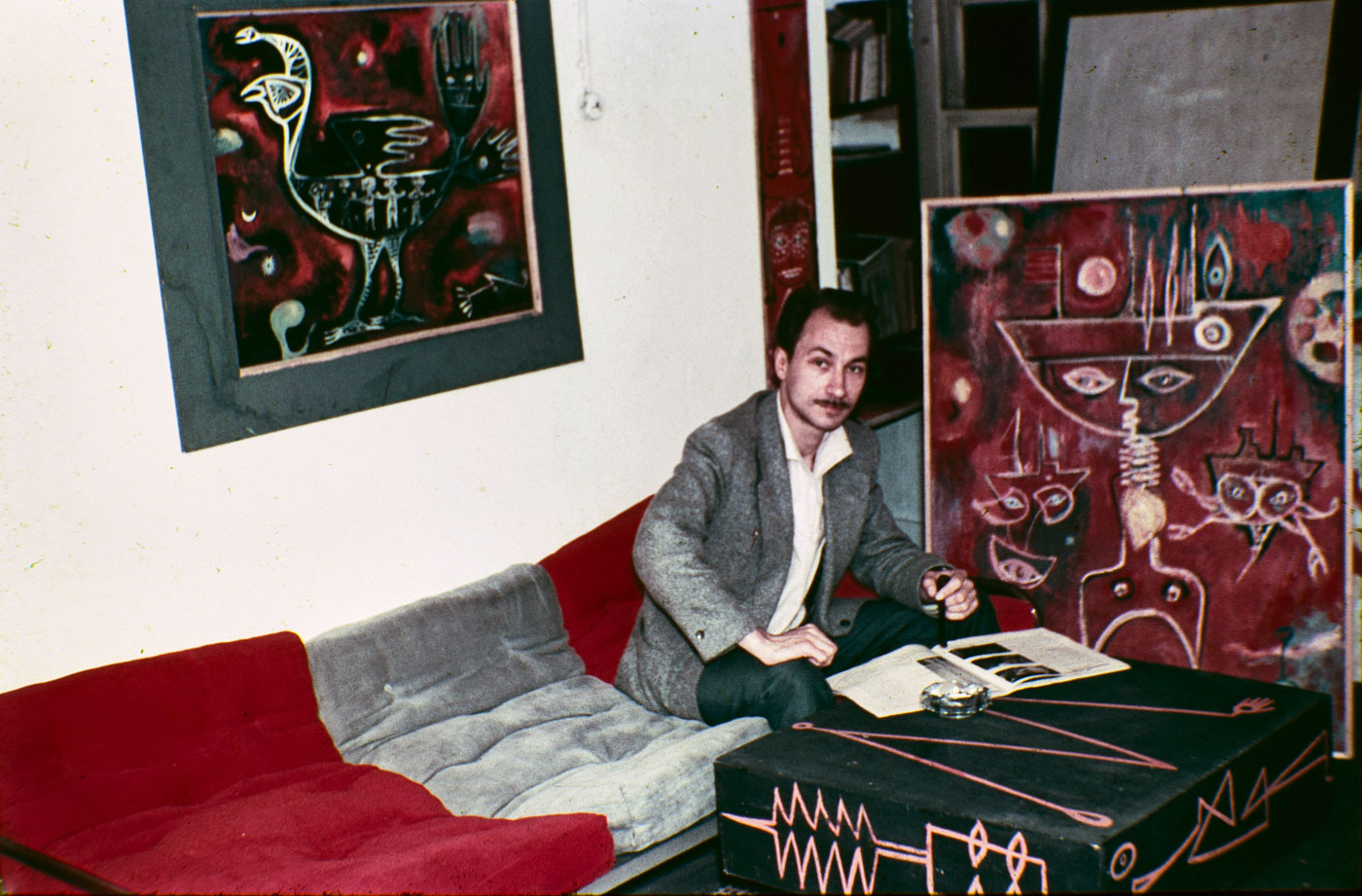
Jan Nieuwenhuys is regarded as one of the most enigmatic and esoteric figures of the European CoBrA movement. His work resists simple categories, it is expressive, mythically charged and deeply personal, in a way that sets it apart from the more exuberant, immediately recognisable imagery of contemporaries such as Appel or Corneille.
He was born on 8 January 1922 in Amsterdam, the younger brother of Constant. From a family with no artistic tradition, both brothers developed an intense interest in art from an early age. Jan attended the Rijksnormaalschool and later the Rijksacademie van Beeldende Kunsten, where he met Karel Appel and Corneille. In 1948 he was a co-founder of the Experimentele Groep in Holland, which a few months later would grow into the international CoBrA movement. Yet he left the group as early as 1949, not out of indifference but on principle: he could not reconcile himself with the internal tensions. "It was not the case that the Experimentele Groep was all harmony," he said later. "We all had our opinions. But we stood behind the manifesto that Constant had drawn up."
Colour, Matter, Subject
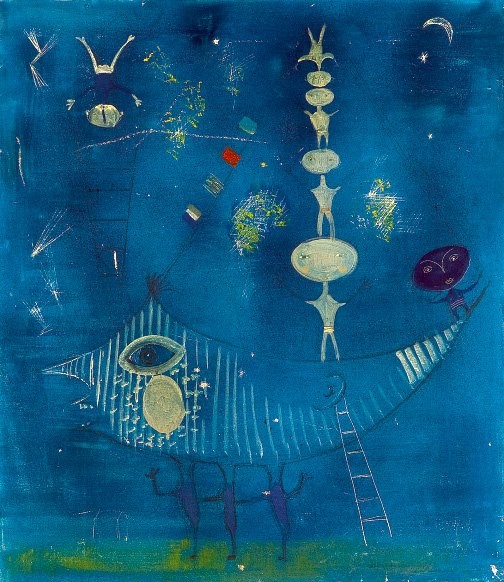
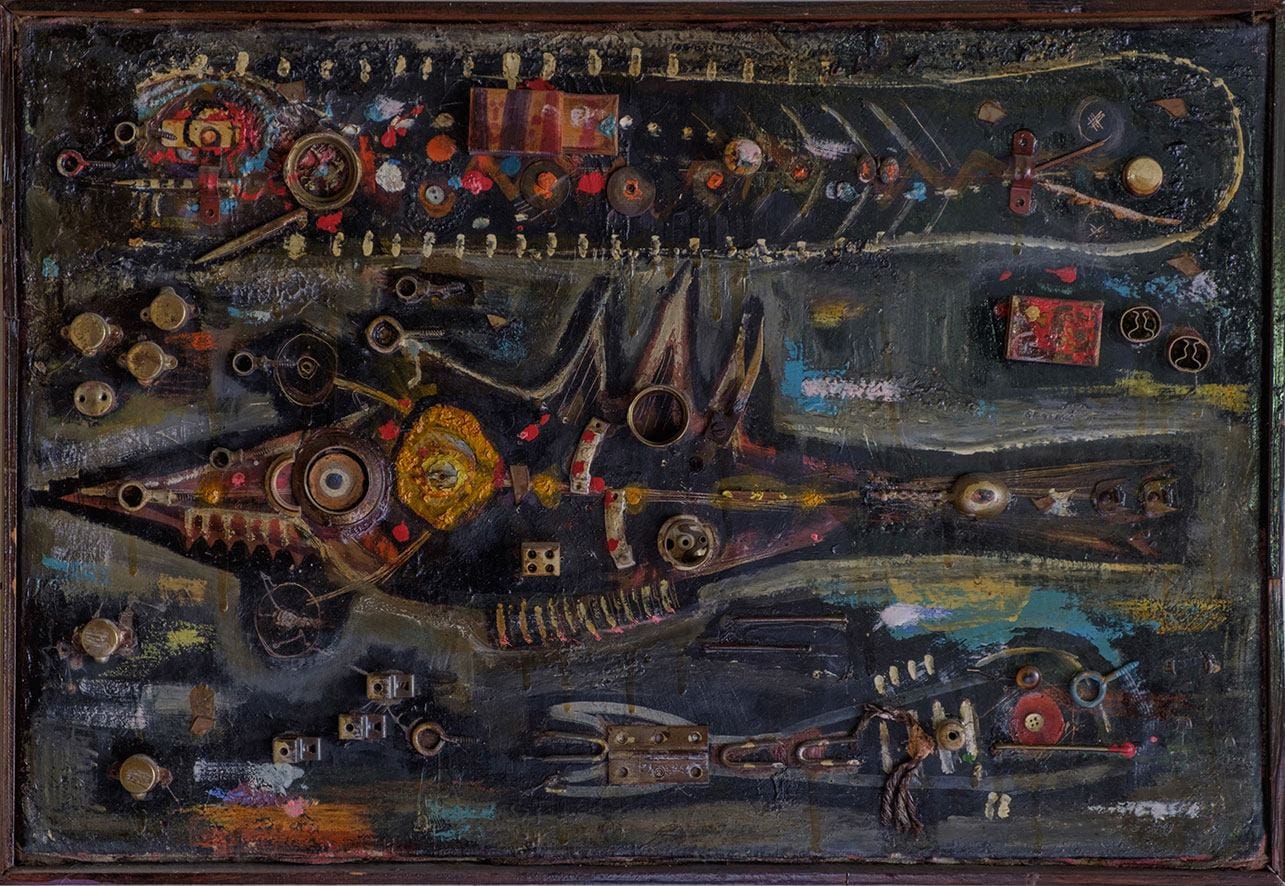
Nieuwenhuys worked from within. Not the subject but the material and the colour came first. From there he found his way to a theme, the reverse of academic tradition. "I start with my material and my colour. With that I express myself. From the material I arrive at my subject."
He regarded himself as neither abstract nor figurative, but explicitly expressive. "As a painter I do not want to paint a set piece. I am not abstract, not non-figurative. I try to be expressive and for that I need certain images." His work never settled into a single style, and that was a deliberate choice. "I paint the way I write, the way I laugh. That is why I paint differently every time, because my moods change."
Beauty as a Diamond
Nieuwenhuys had a sharp and unsentimental understanding of what art can do. Beauty for him was not a fixed standard but something bound to its time:
"Beauty or truth is something like a diamond, it always catches the light differently. That is why you cannot say: that is beautiful. Every era has its own beauty. What is beautiful or true in one era has no meaning for another. That is why you could never paint like Rembrandt again. I have great admiration for Rembrandt, he was the expression of the seventeenth century, but we live in a different century now."
That different century had a very concrete face for Nieuwenhuys: the atom bomb, hunger, the tension of a world growing larger and less manageable by the day. "Today I am in China, tomorrow in Paris, the day after somewhere else. Every day we are confronted with what is happening in the world." In abstract art he missed precisely that pulse. "The abstractionists only build a false world for you."
The Artist as Contemporary
What sets Nieuwenhuys apart from contemporaries who fixed themselves to a style or movement is his conviction that the artist must be a witness and a participant. "The artist must give his own time a shape. Whether he is an architect, a poet or a painter makes no difference." Equally direct: "I would like it, when people see my work later, that they can see the twentieth century in it."
His sketches, more than a thousand works on paper, small in scale but wide in reach, are the most direct evidence of how that looked in practice. No final product, no audience. Only the act of searching itself, recorded in lines never intended for publication.
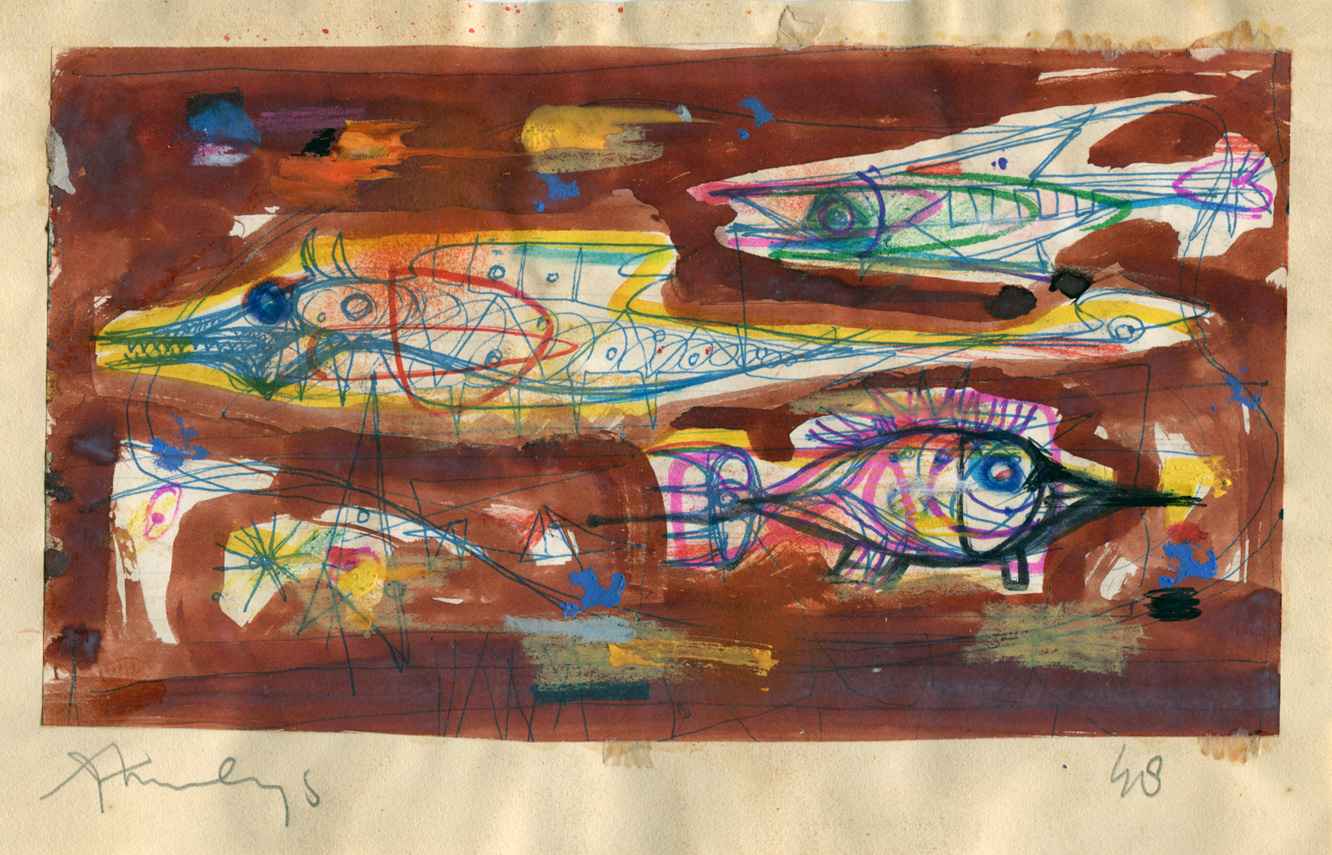
Fish — 1949
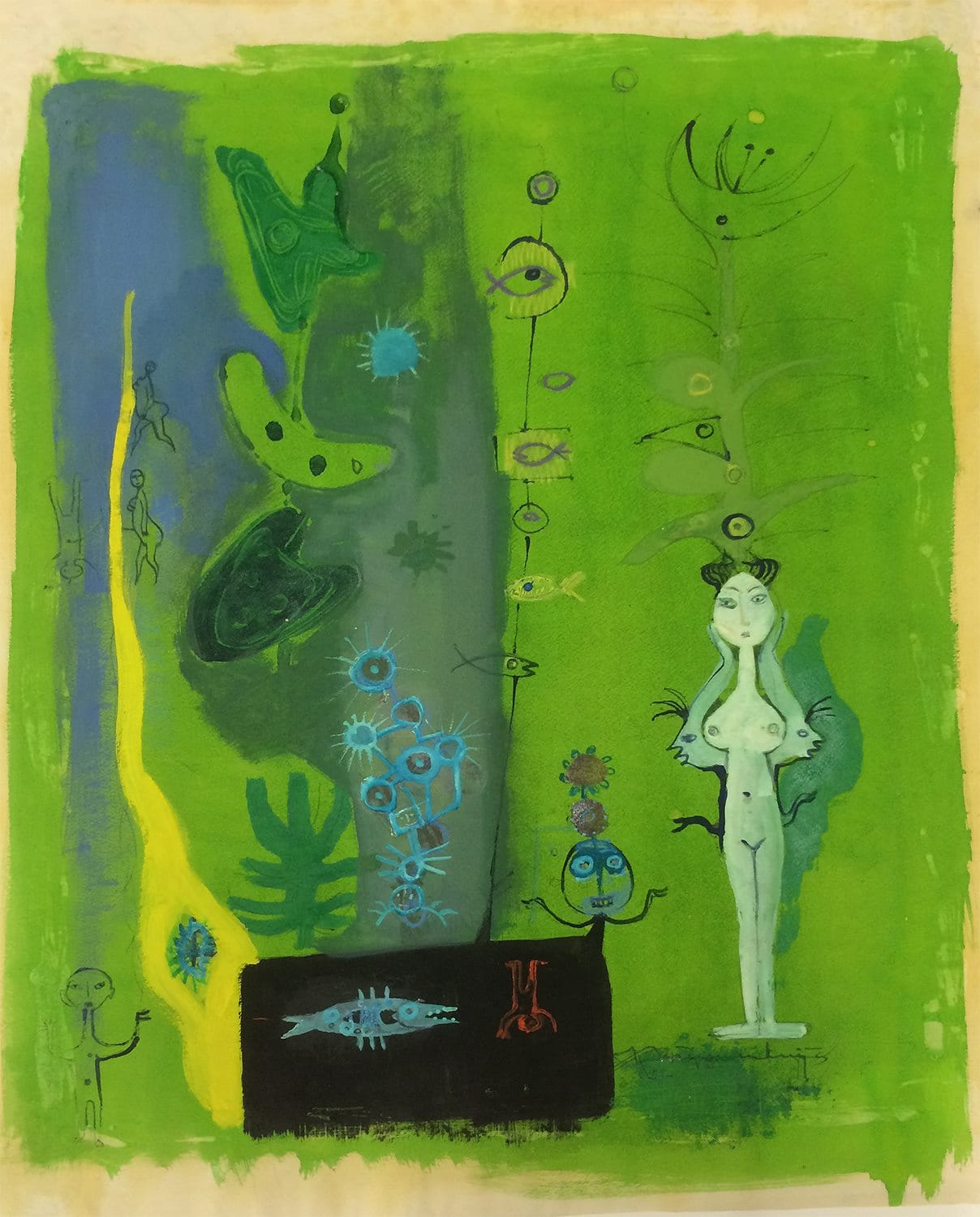
Garden — 1952, collection Rijksmuseum Amsterdam